Exercises / Deadlift
How to deadlift: proper form and 4 common mistakes
Hinge at your hips to grip the bar with your back in its natural line, then push the floor away and stand up tall with the bar sliding up your legs.
Good form
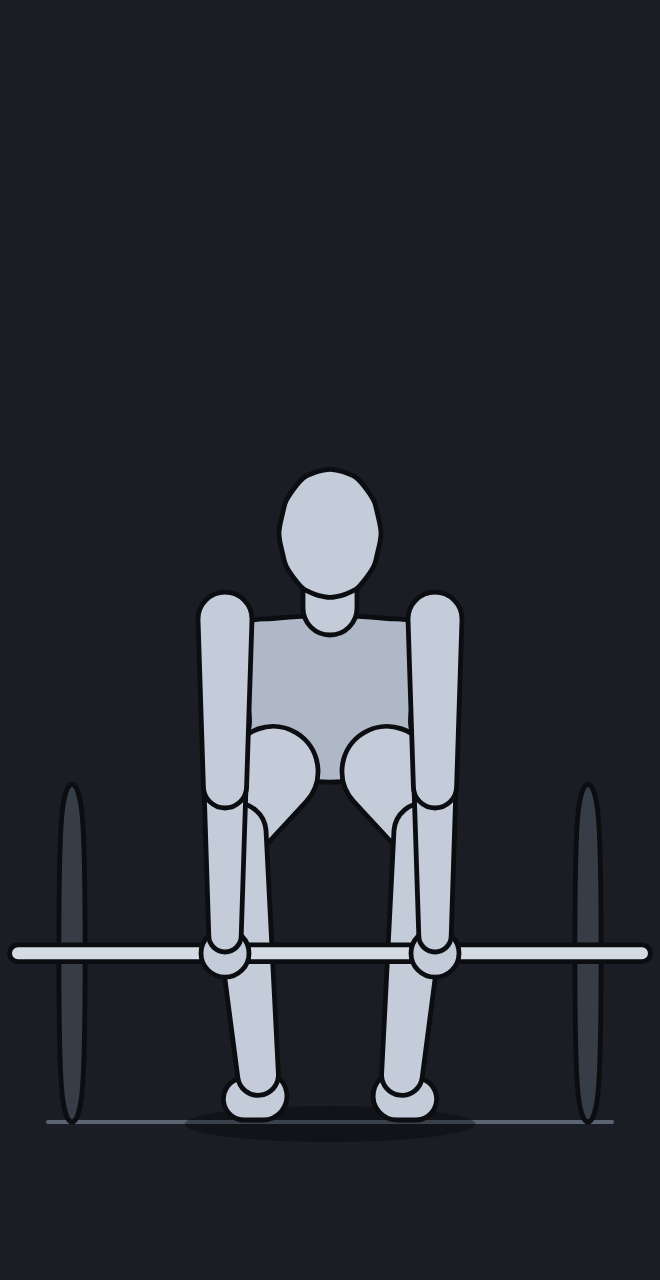
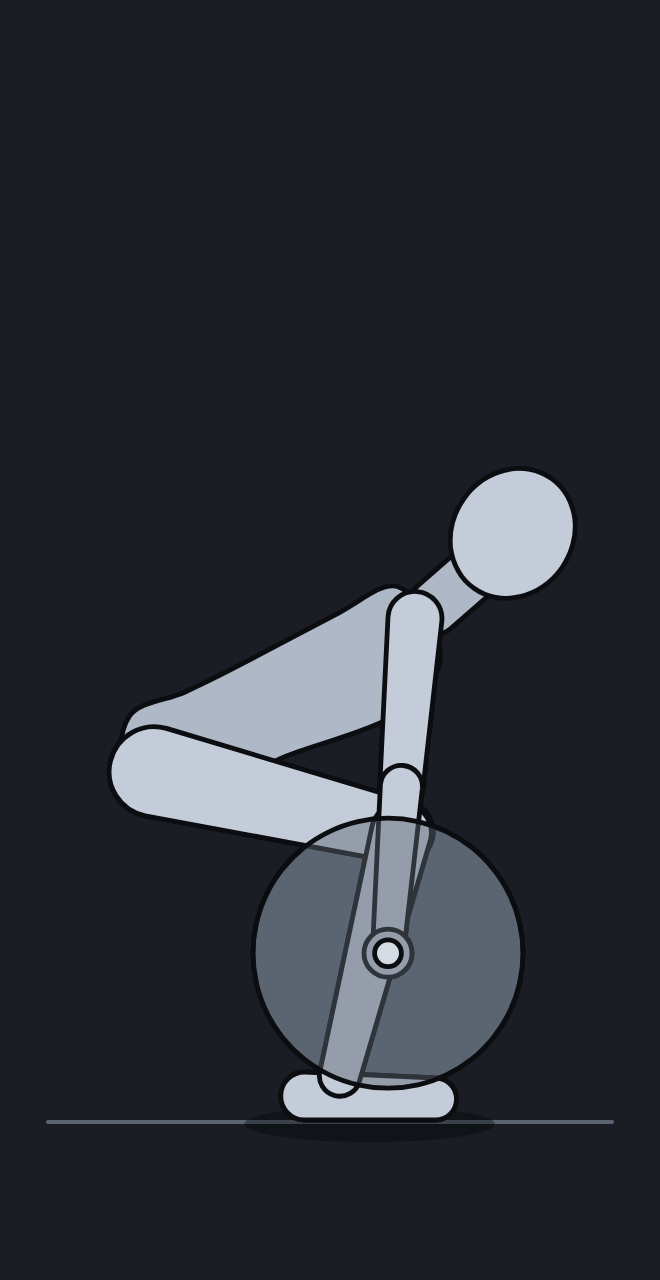 Front viewSide view
- Feet about hip width apart, with the bar over the middle of your feet.
- Push your hips back and bend your knees until your hands reach the bar just outside your legs.
- Set your back in its natural line and take the slack out of the bar before it leaves the floor.
- Push the floor away. Your hips and shoulders rise together, and the bar slides up your shins and thighs.
- Finish standing tall with your glutes tight. Don't lean back.
Lower back rounding off the floor
As the bar breaks from the floor, your lower back curves and your hips tuck under, so your back looks like a hump instead of a flat line.
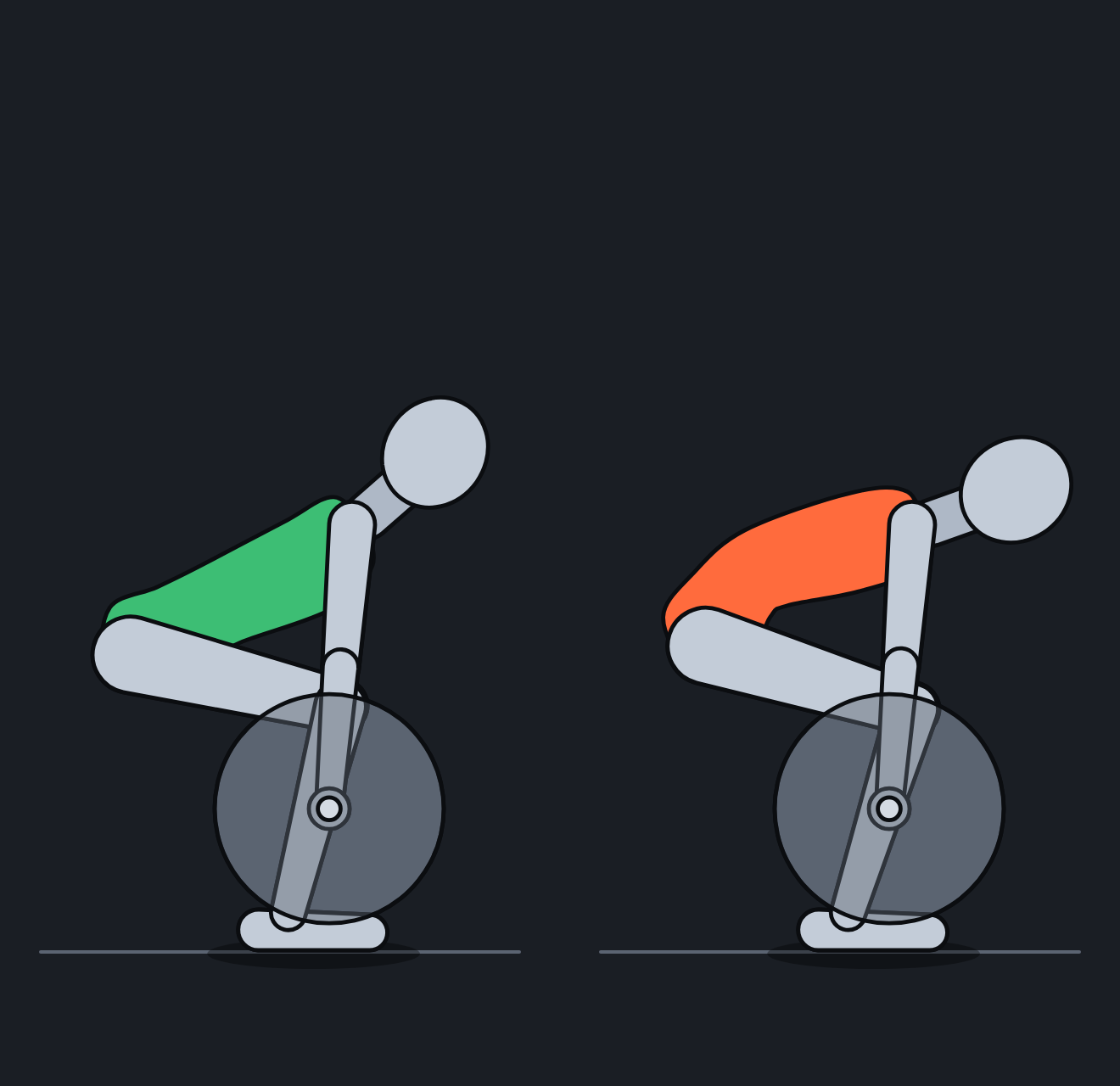 Like thisNot like this
Back stays in one lineLower back curls over
See it from the three-quarter
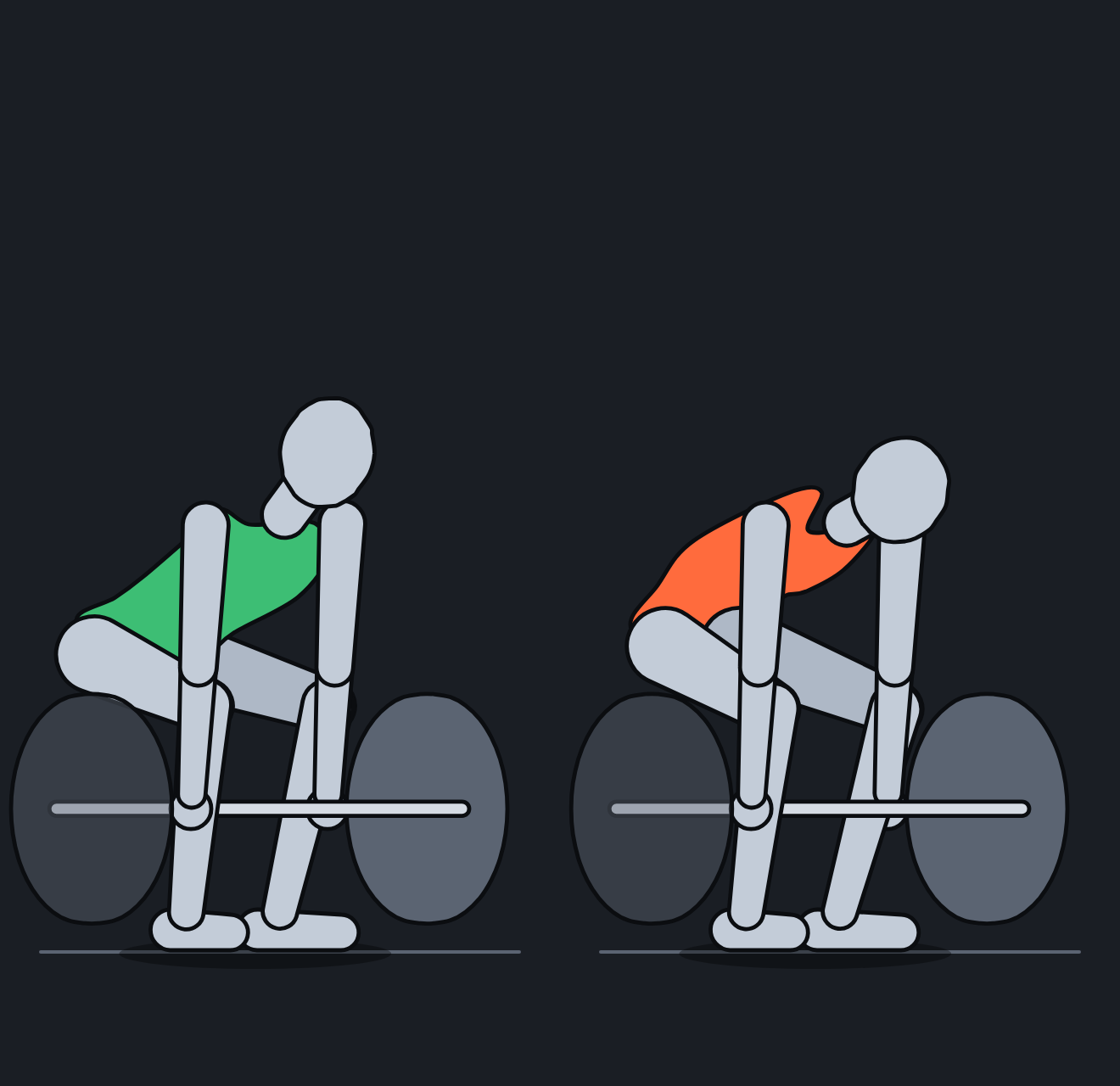 Like thisNot like this
Back stays in one lineLower back curls over
Right away
- Rounding the lower back may put more stress on the discs in your spine. In a lab study of heavy deadlifts, the lower back bent further as the weight got heavier.1
- Starting from a rounded lower back may leave more of the load on the spine itself. In one older lab study of squat-style lifts, people who started rounded had the biggest forces land on the bent spine at moments when their back muscles were doing little.2
Months & years
- In lab tests on animal spines, bending the spine over and over under load was linked with disc injury. How much that applies to people deadlifting is still debated.3
- A small amount of rounding isn't automatically a problem. A recent review found that trained lifters often show some natural bend in the lower back without clear evidence of more injuries, and that jumping up in weight too fast may matter more.44
How to fix it
- Before the bar moves, pull the slack out of it: grip, tighten your upper back, and pull just hard enough that the bar and plates click.
- Brace before every rep: breathe in, then tighten your stomach as if someone were about to poke it.
- Lower the weight until you can keep your back's natural line for every rep, and add weight in small steps.
- If you can't reach the bar without rounding, raise it on blocks or plates a few inches while your hip mobility improves.
Easier versions while you learn
- Pull from blocks set just high enough that your back stays in its natural line.
- Kettlebell deadlift from a raised step, with a pause at the bottom to check your back.
See a doctor or physical therapist if
- Back pain spreads down a leg, or you feel numbness or tingling.
- You feel a sharp pain or a "tweak" in your back during a lift.
- Back pain doesn't ease within a couple of weeks, or it wakes you at night.
Hips shooting up first
Your hips rise before the bar leaves the floor, your legs straighten early, and your chest stays down, so the lift turns into a stiff-legged pull with your back doing the work.
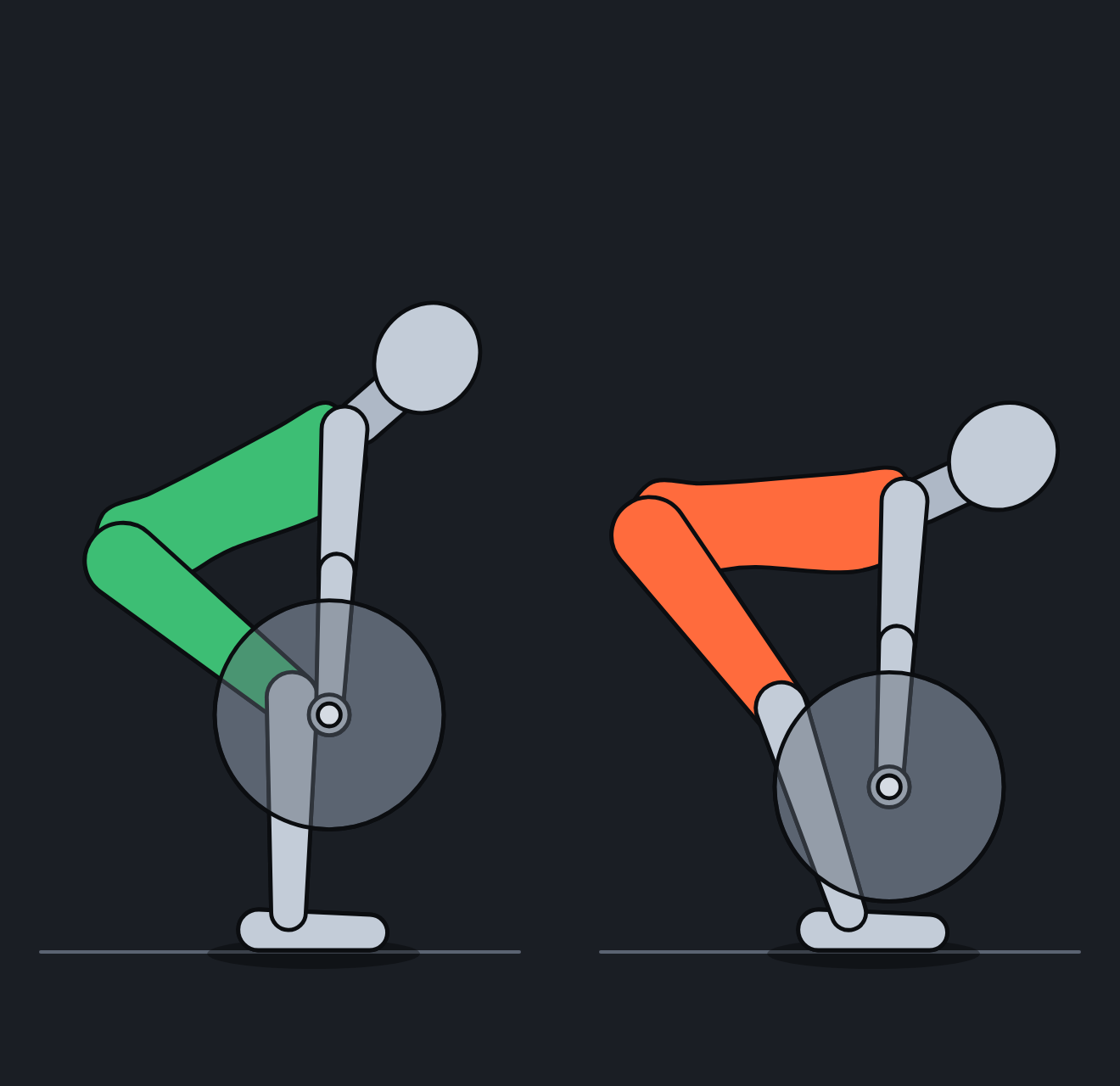 Like thisNot like this
Hips and chest rise togetherHips shoot up first
See it from the three-quarter
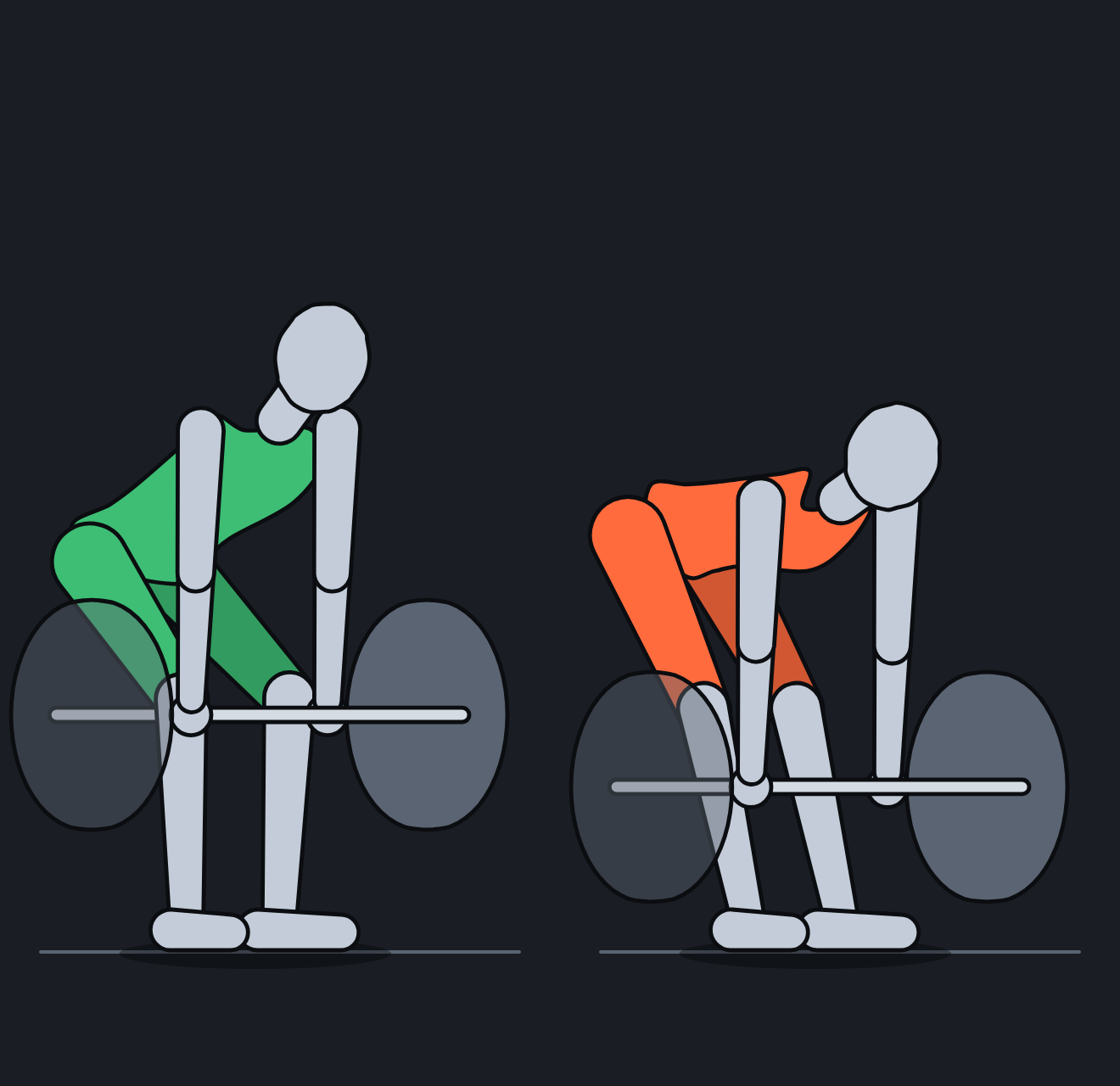 Like thisNot like this
Hips and chest rise togetherHips shoot up first
Right away
- Once your legs straighten early, more of the work tends to shift to your hips. In a squat study, a more tipped-forward torso with more upright shins shifted effort from the knees to the hips.5
- A stiff-legged, bent-over pull may put more shearing force on the lower back. In a modeling study of lifting a box, stoop-style lifts had higher shear loads at most lower-back levels, though less compression.66
Months & years
- Form can drift as a set gets hard. In one study of recreational lifters doing hex-bar deadlifts to failure, their torsos bent further as the set went on, and the authors suggested that extra demand on the spine can add to the risk of low back injury.7
How to fix it
- Think "chest and hips rise together" as the bar leaves the floor.
- Push the floor away with your legs rather than pulling the bar with your back.
- Check your start: if your hips start very low, they often pop up to where they want to be. Set them a little higher so your shoulders are just in front of the bar.
- End the set when your hips start to rise first. That rep is your signal the weight or the set is too long for today.
Easier versions while you learn
- Pause deadlift: lift the bar an inch off the floor, hold 2 seconds with your chest up, then finish the rep.
- Use a hex (trap) bar, which lets you stand inside the weight and use your legs more.
See a doctor or physical therapist if
- Your lower back aches during or after deadlifting and it keeps coming back.
- You feel a sharp pull at the back of your thigh during a lift.
Bar drifting away from the legs
The bar swings forward, away from your shins and thighs, so there's a gap between the bar and your legs on the way up.
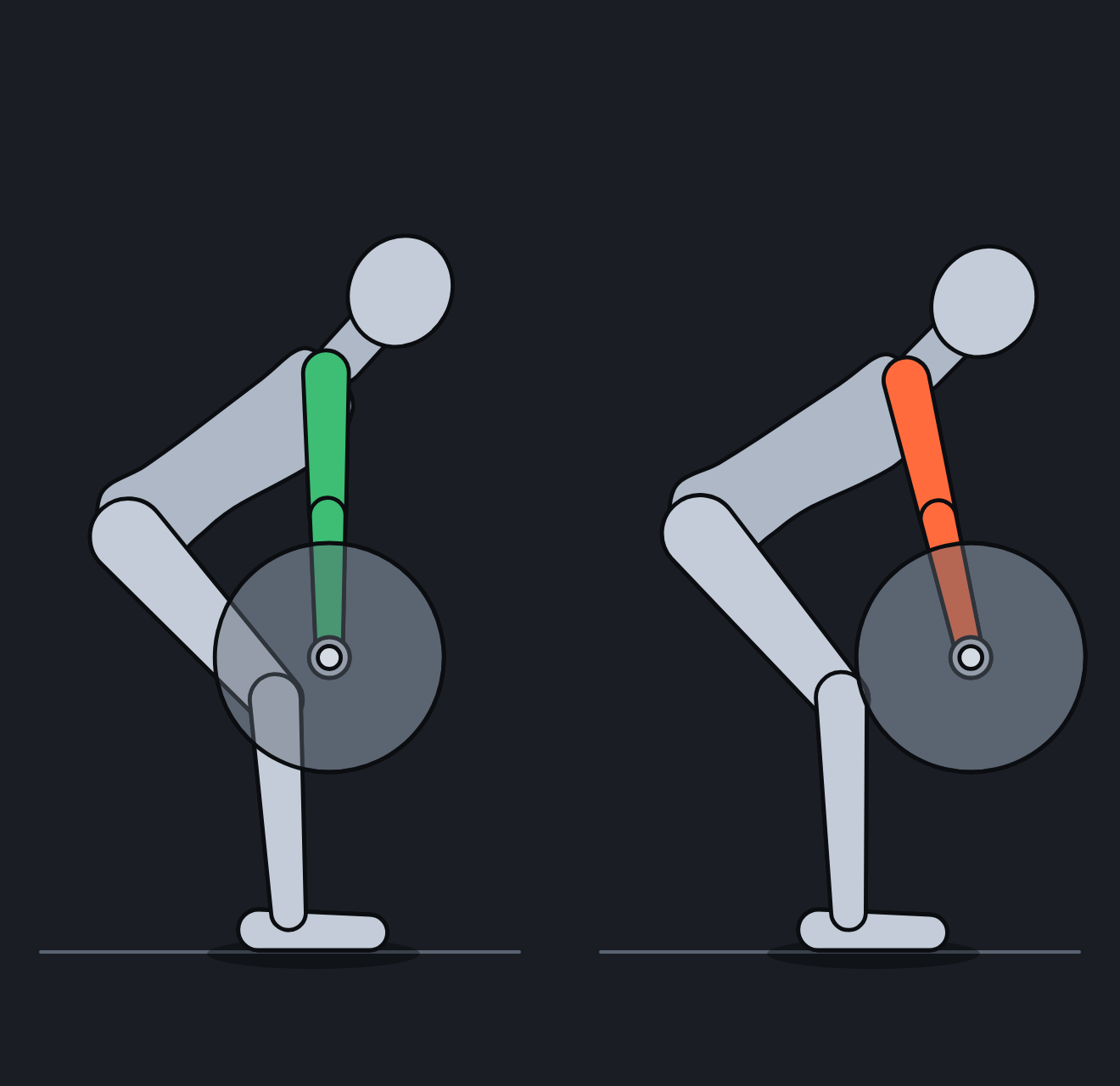 Like thisNot like this
Bar slides up the legsBar swings out front
See it from the three-quarter
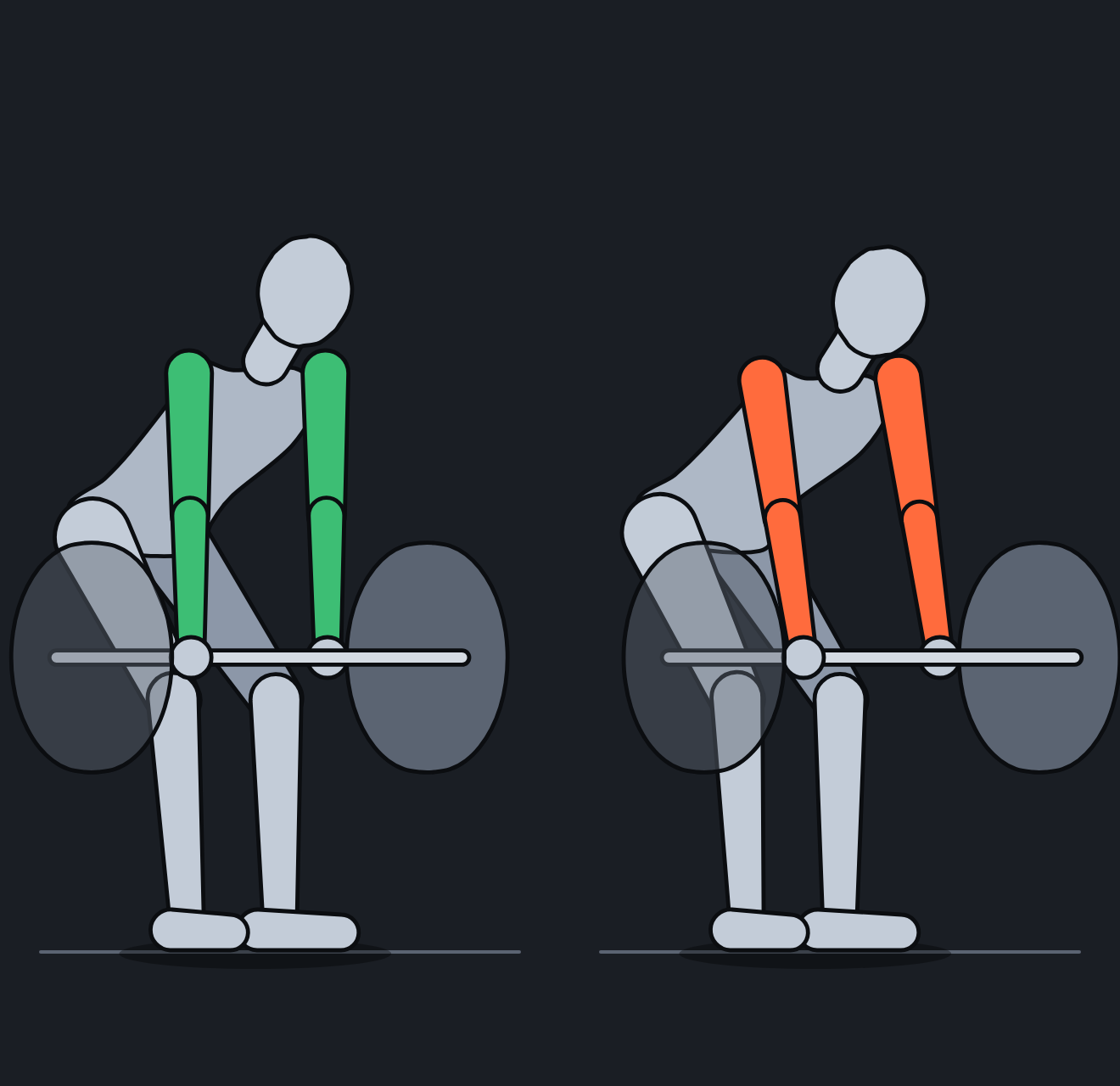 Like thisNot like this
Bar slides up the legsBar swings out front
Right away
- The farther the weight is from your body, the harder your lower back tends to work to hold it. In a lab study of men lifting a wide box by high handles, the technique that kept the load closest to the lower back cut spinal compression by more than 20%.8
Months & years
- More load on the lower back during lifting is considered a risk factor for low back pain, so letting the bar drift rep after rep may add up.9
How to fix it
- Start with the bar over the middle of your feet, about an inch from your shins.
- Before you pull, squeeze your armpits as if holding a newspaper under each arm. That keeps the bar close.
- Let the bar slide up your legs. Long socks or track pants help if it scrapes your shins.
Easier versions while you learn
- Romanian deadlift from standing with light weight, keeping the bar touching your thighs the whole way.
- Kettlebell deadlift, with the bell set between your feet so it can't drift forward.
See a doctor or physical therapist if
- Your lower back aches during or after deadlifting and it keeps coming back.
- You feel pain in the front of your shoulders or your elbows from holding the bar.
Leaning back at the top
At the top, instead of standing tall, you lean back with your hips pushed forward and your lower back arched hard.
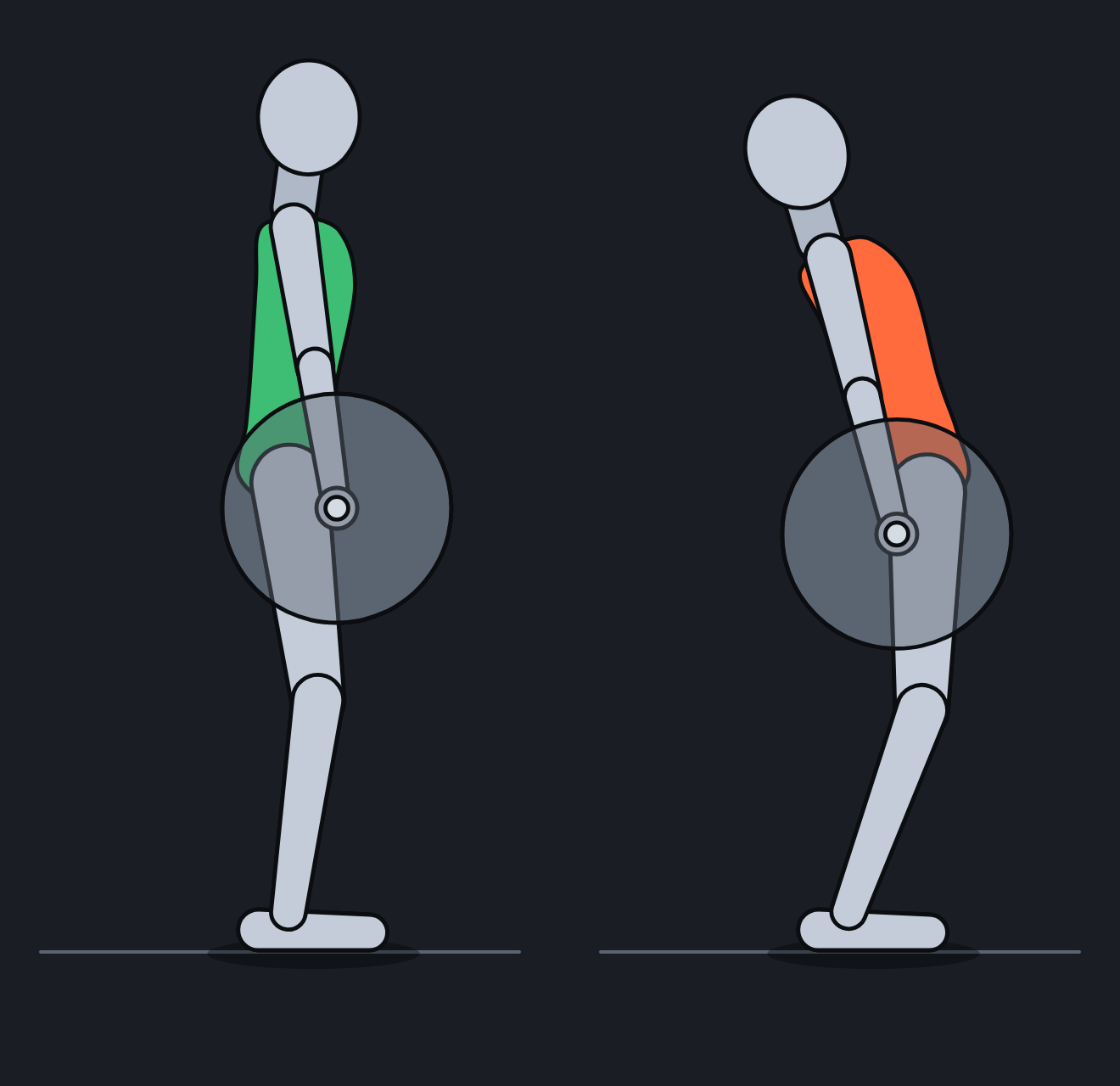 Like thisNot like this
Standing tallLeaning back
See it from the three-quarter
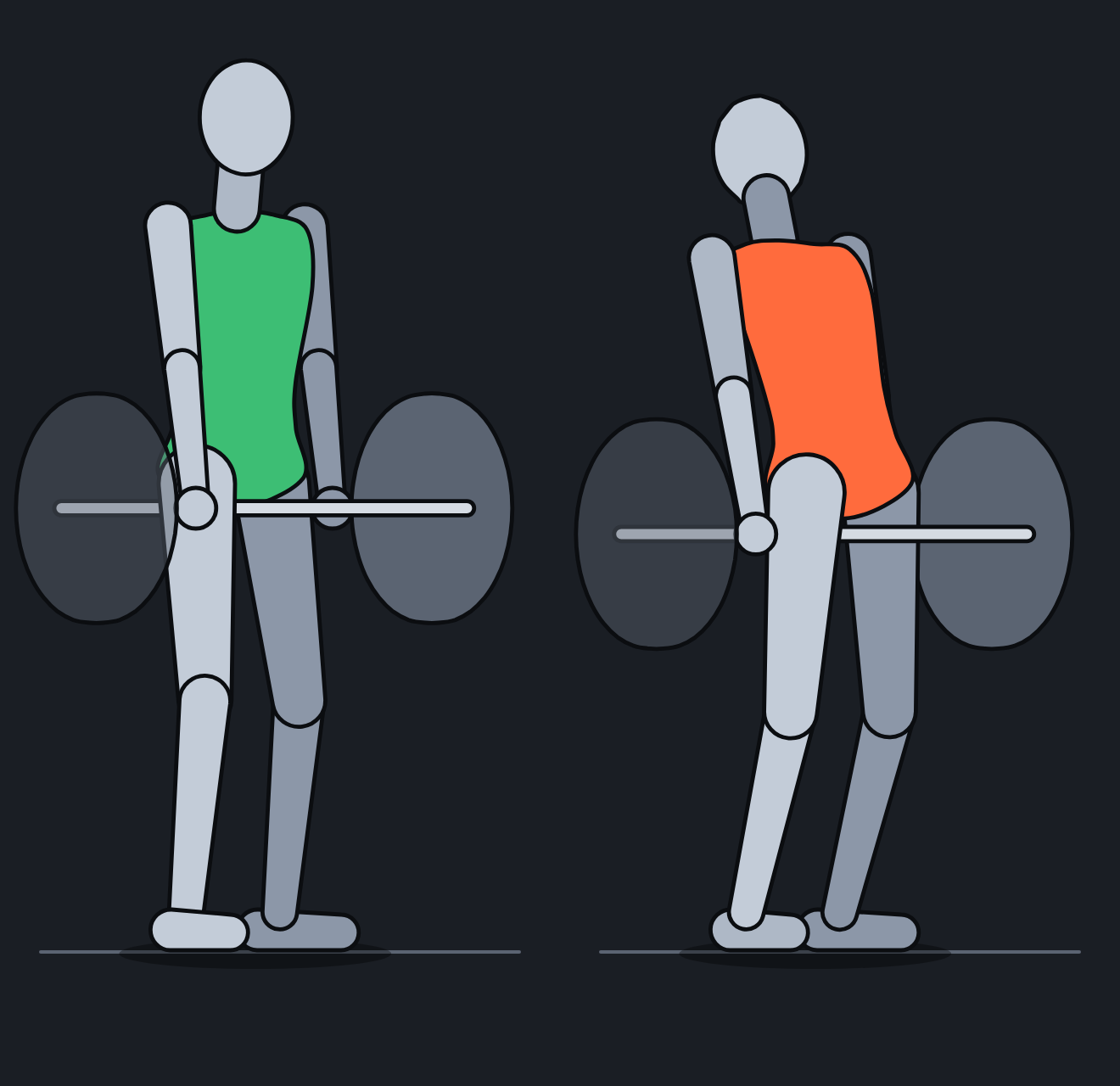 Like thisNot like this
Standing tallLeaning back
Right away
Months & years
- Repeated back arching is linked with a stress fracture in the lower spine called spondylolysis: a review names sports such as weightlifting, gymnastics and diving.11
How to fix it
- Finish by squeezing your glutes and standing tall, with your ribs stacked over your hips.
- The lift is done when your hips and knees are straight. There's nothing extra to gain by leaning back.
- Film from the side: your body should make a straight line from ear to ankle at the top.
Easier versions while you learn
- Glute bridge or hip thrust to learn to finish with your glutes instead of your lower back.
- Practice the top position with no weight, back against a wall, ribs down.
See a doctor or physical therapist if
- You have lower back pain that's worse when you arch backward.
- Back pain spreads down a leg, or you feel numbness or tingling.
For trainers: how to cue it
- Film from the side. All four faults below show best from that angle.
- Have the client set up, then pull the slack out of the bar ("make the bar click") before it moves. Most early back rounding starts with a jerk off the floor.
- If the hips shoot up first, cue "chest and hips rise together" and check that the starting hip height isn't too low for the client's build.
- Teach the hinge first with a dowel along the back (head, upper back and tailbone touching), then a kettlebell from a raised block, before loading a barbell from the floor.
Older adults: the safer version
A hip hinge to a raised surface trains the same pattern without reaching all the way to the floor.
- Start with no weight: stand an arm's length from a kitchen counter, push your hips back and slide your hands down your thighs, then stand tall again. Keep a hand near the counter if you need it.
- When that feels steady, set a light kettlebell or dumbbell on a sturdy box or step, so you don't have to reach the floor.
- Stand close with the weight between your feet. Push your hips back, bend your knees a little, keep your back in its natural line and grip the handle.
- Push through your whole foot to stand up tall. Lower it the same way. Start with 5 slow reps, and stop if anything hurts or you feel dizzy.
Questions people ask
Is the deadlift bad for your back?
It doesn't have to be. A review of strength sports, powerlifting included, found injury rates in those athletes that look relatively low next to common team sports. The lower back is one of the most commonly hurt areas, though, so form and sensible jumps in weight matter.1212
Does my back have to be perfectly flat?
Aim for your back's natural line, not a forced arch or a perfectly flat board. A recent review suggests a little natural bend in trained lifters isn't clearly linked with more injuries.4
Is a hex (trap) bar easier on my lower back?
It can be. In a study of powerlifters, the hex bar put less load on the lower back, hips and ankles and more on the knees than a straight bar. It's a good place to start if the straight bar feels awkward.13
Want Vicky to watch your deadlift?
She coaches in person and online. Send a short video or a question and she'll reply herself.
Email VickySources
- Load-dependent increase in lumbar kyphosis is associated with posterior pelvic tilt during deadlift.
- Erector spinae activation and movement dynamics about the lumbar spine in lordotic and kyphotic squat-lifting.
- Intervertebral disc herniation: studies on a porcine model exposed to highly repetitive flexion/extension motion with compressive force.
- Beyond the Neutral Spine: A Narrative Review and Modern Framework for Low Back Injury Prevention in Deadlifting.
- The effect of trunk and shank position on the hip-to-knee moment ratio in a bilateral squat.
- From Stoop to Squat: A Comprehensive Analysis of Lumbar Loading Among Different Lifting Styles.
- Influence of Repetitions-to-Failure Deadlift on Lumbo-Pelvic Coordination, With and Without Body Armor.
- How to lift a box that is too large to fit between the knees.
- Low-back loading in lifting two loads beside the body compared to lifting one load in front of the body.
- Lumbar facet pain: biomechanics, neuroanatomy and neurophysiology.
- Spondylolysis and Isthmic Spondylolisthesis: A Guide to Diagnosis and Management.
- The Epidemiology of Injuries Across the Weight-Training Sports.
- A biomechanical analysis of straight and hexagonal barbell deadlifts using submaximal loads.