Exercises / Lunge
How to lunge: proper form and 3 common mistakes
Stand in a long split stance with both feet planted, then lower straight down until your back knee nearly touches the floor and push back up, with your front knee over your foot and your torso tall.
Good form
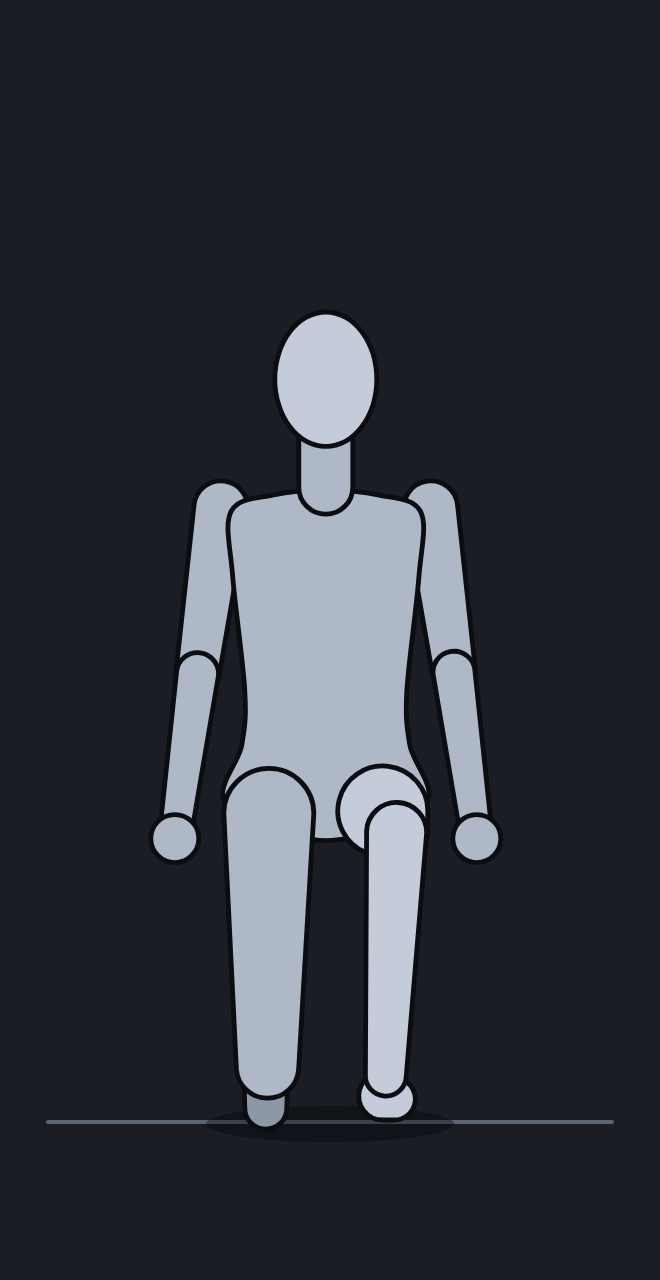
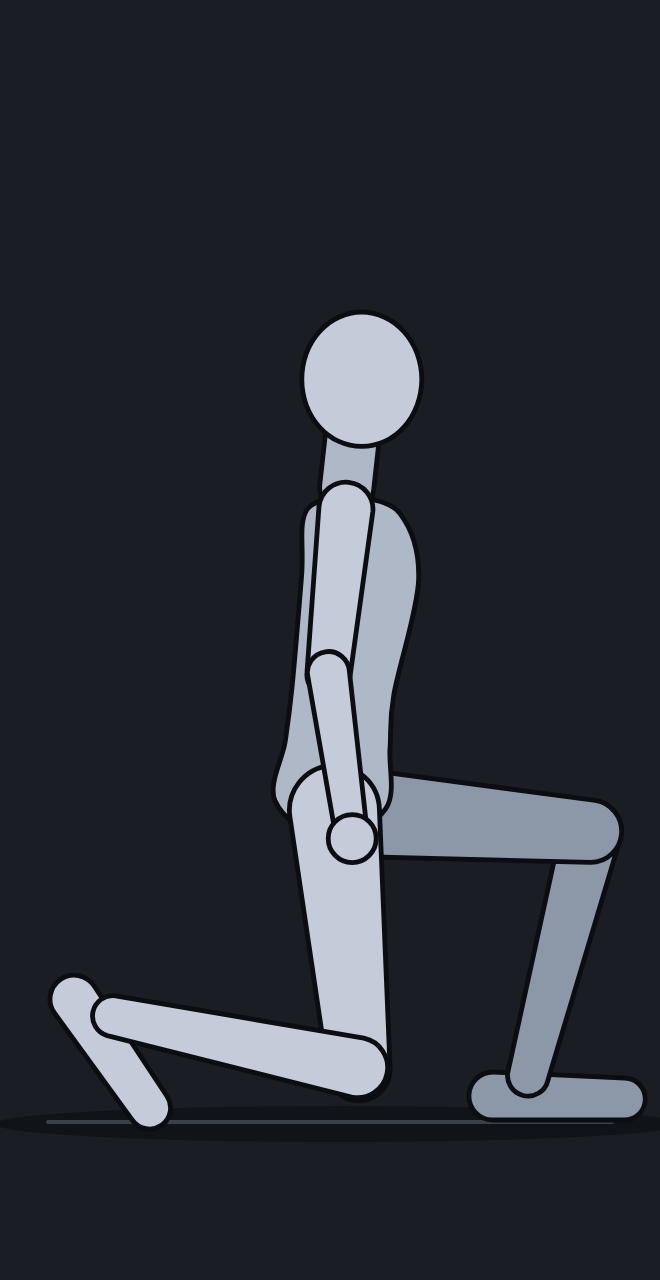 Front viewSide view
- Take a long step so both knees can bend to about a right angle at the bottom. Feet stay about hip width apart, like standing on train tracks.
- Keep both feet planted. Go straight down and straight up, like an elevator.
- Front knee points the same way as your front toes the whole rep.
- Torso tall, with your shoulders stacked over your hips or just in front.
- Front heel stays down. Push through the middle of your front foot to stand up.
Front knee caving in
As you lower or push back up, your front knee drifts in toward the midline and ends up inside the line of your front foot.
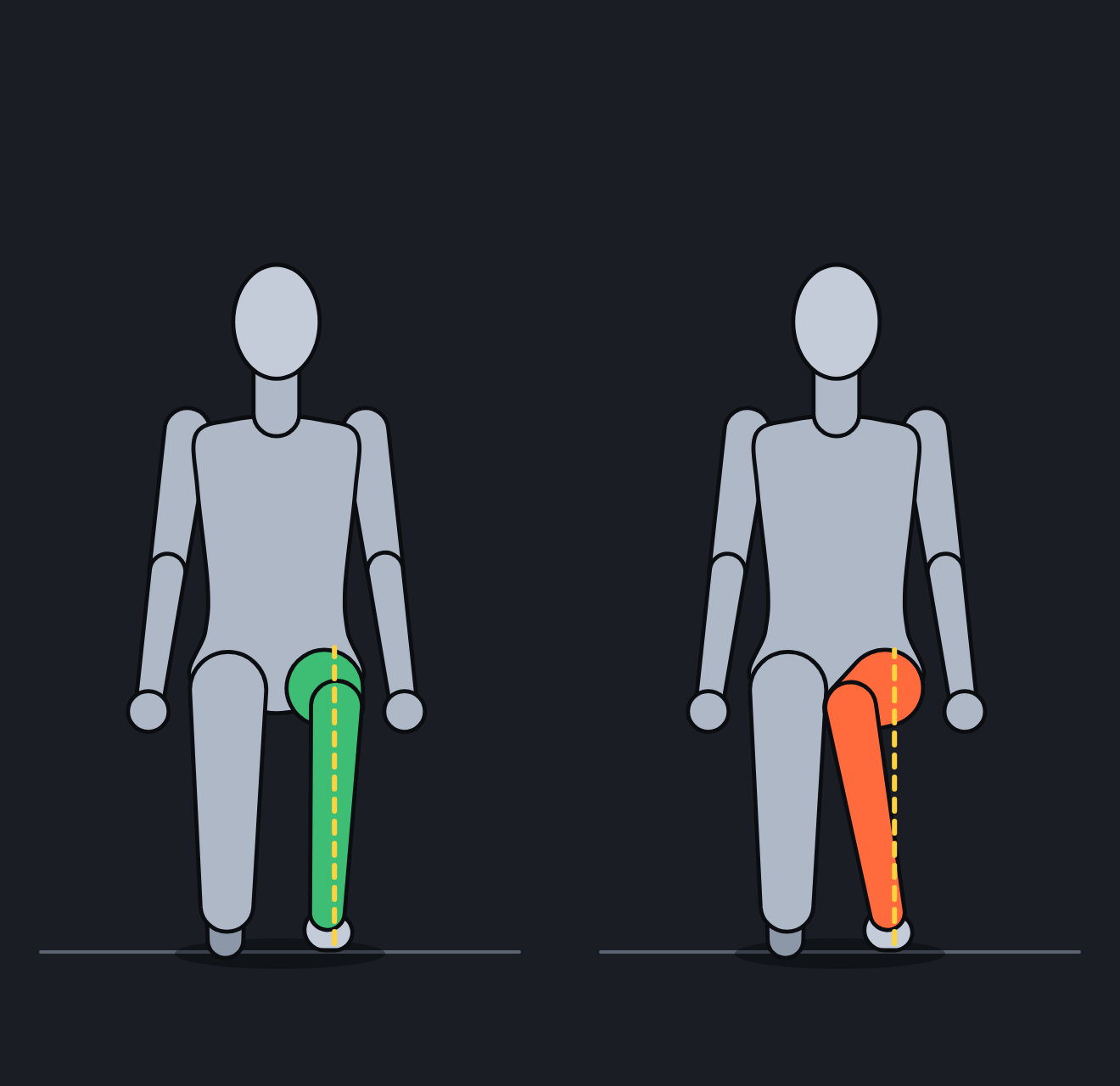 Like thisNot like this
Front knee over the toesFront knee caves in
See it from the three-quarter
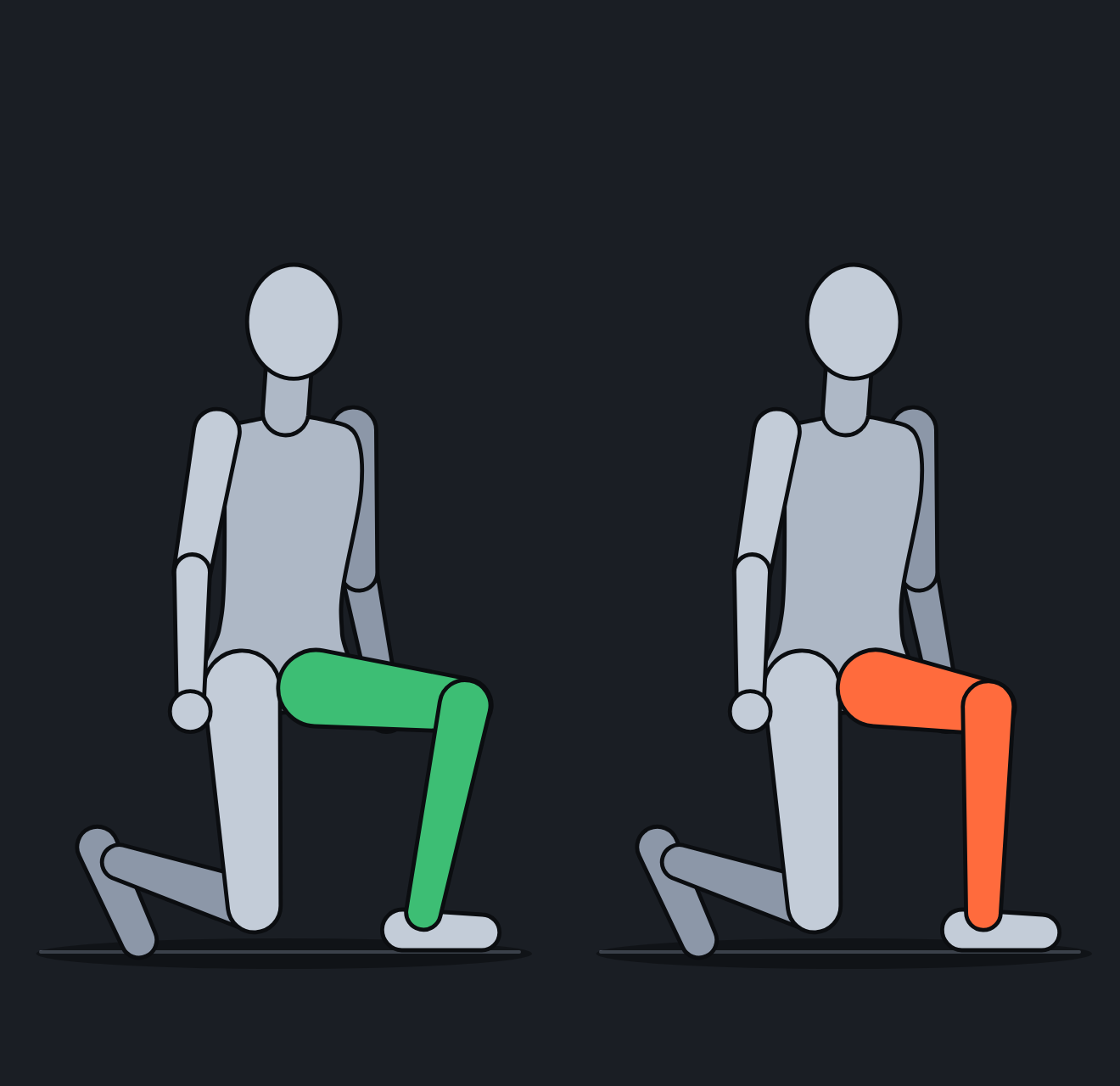 Like thisNot like this
Front knee over the toesFront knee caves in
Right away
- Your front knee drifts out of line with your hip and foot. Poor control at the hip and trunk can change how the knee moves and takes load.1
Months & years
- Knees that angle inward on one leg are linked with pain at the front of the knee. In one small study of women, those with that pain showed about twice as much inward knee angle during a single-leg squat as those without it.222
- In one study of male military recruits, those whose knees angled in more than about 5 degrees during single-leg landings were about twice as likely to develop pain at the front of the knee.3
How to fix it
- Think "front knee toward your pinky toe" all the way down and up.
- Slow the lowering to 3 seconds and watch your front knee in a mirror.
- A review recommends building glute strength, side-trunk strength and ankle mobility to reduce knees caving in on single-leg movements. Easy places to start: side-lying leg raises, clamshells and banded side steps.4
- Strength isn't the whole story. In one lunge study of healthy adults, hip strength didn't track with how much the knee moved in or out, and the authors suggested balance and control may matter more.55
Easier versions while you learn
- Hold a counter or a sturdy chair back for balance so you can focus on the knee.
- Lower only halfway, to the depth where your front knee stays over your toes.
See a doctor or physical therapist if
- Your knee hurts during or after lunging and it hasn't eased within a week or two.
- Your knee swells, locks, catches or gives way.
- The front of your knee aches on stairs or after sitting for a long time.
Chest dropping forward
Your chest folds down over your front thigh at the bottom, and your shoulders end up well in front of your front knee.
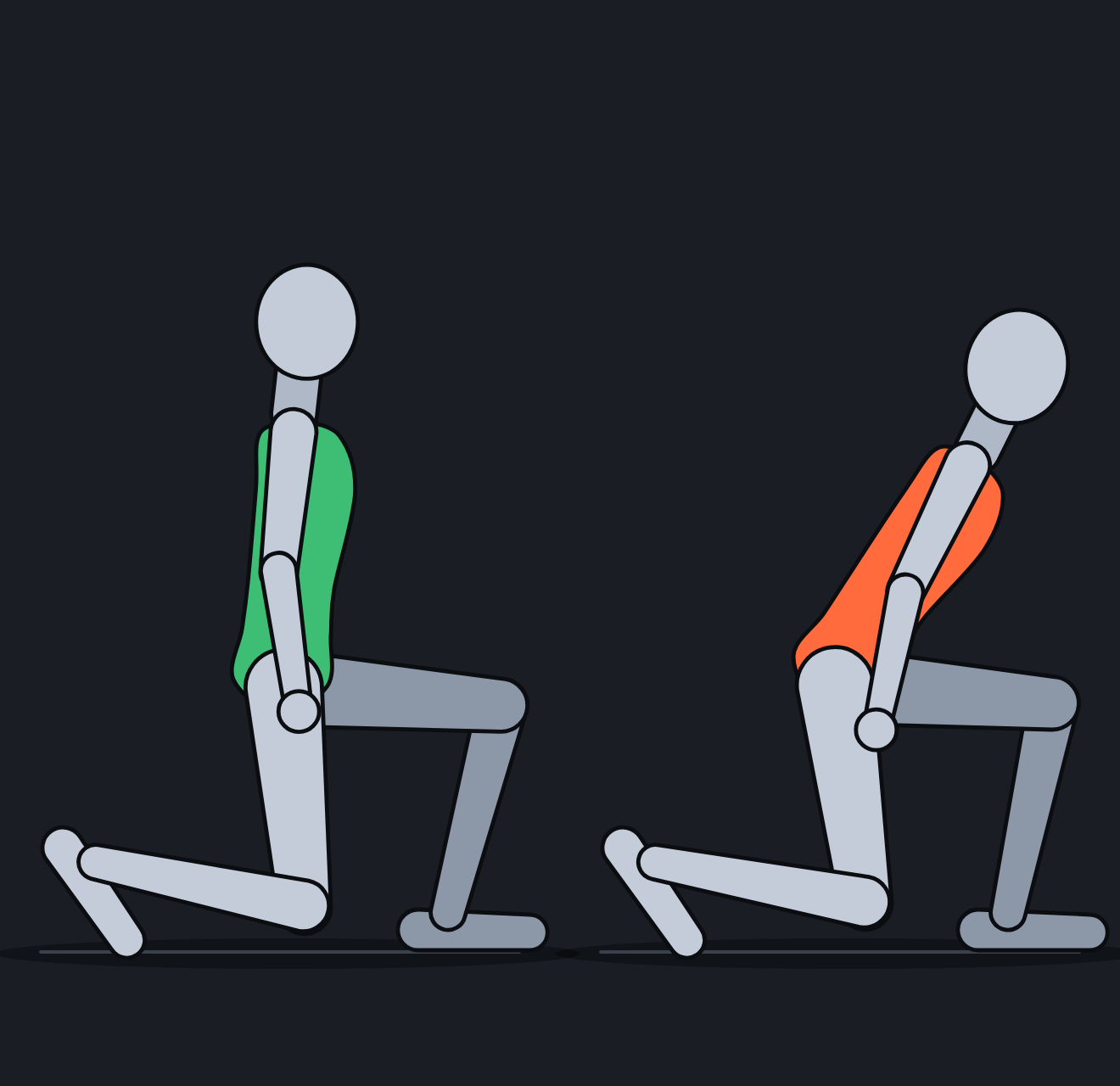 Like thisNot like this
Torso tallChest folds over the thigh
See it from the three-quarter
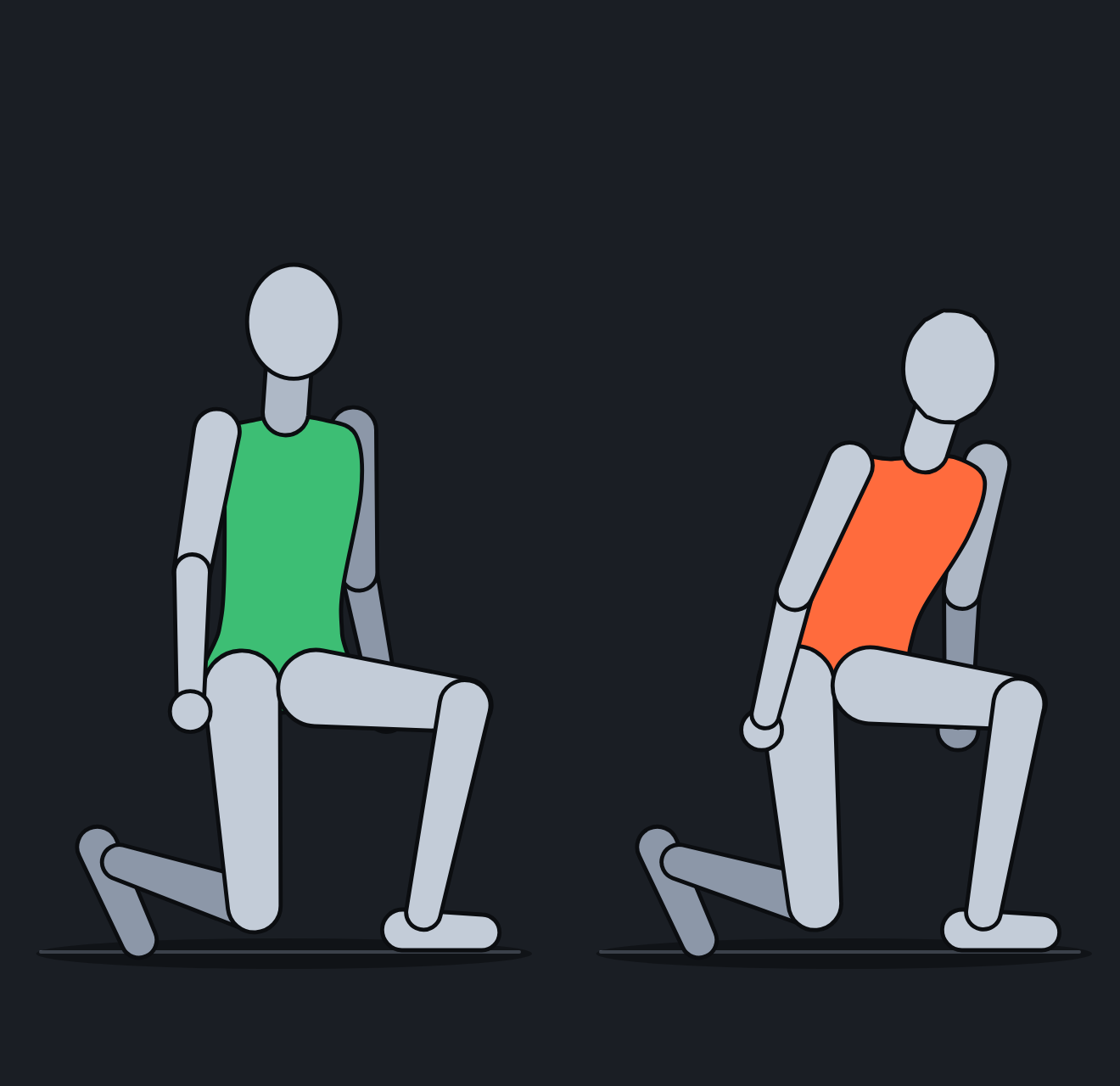 Like thisNot like this
Torso tallChest folds over the thigh
Right away
Months & years
- If your front knee also slides far forward, leaning over may add load to the kneecap joint rep after rep. In a lab study, a forward torso with a forward front shin put the most stress on the front knee's kneecap joint.8
How to fix it
- Chest proud: imagine showing the logo on your shirt to someone in front of you.
- A slight forward lean is fine. The fault is folding your chest down over your thigh.
- Hold a light weight at your chest (goblet hold). It gives your upper back something to work against and helps you stay tall.
- Lengthen your stance a little if your hips feel cramped at the bottom.
Easier versions while you learn
- Hold a dowel or broomstick upright in front of you and keep your chest close to it.
- Lunge with your back to a wall, a few inches away, and keep your shoulders from drifting forward.
See a doctor or physical therapist if
- Your lower back aches during or after lunging and it keeps coming back.
- The front of your knee aches during lunges, on stairs, or after sitting for a long time.
Front heel lifting
At the bottom, your front heel peels up and your weight rolls onto the ball of your front foot, often with your front knee sliding far past your toes.
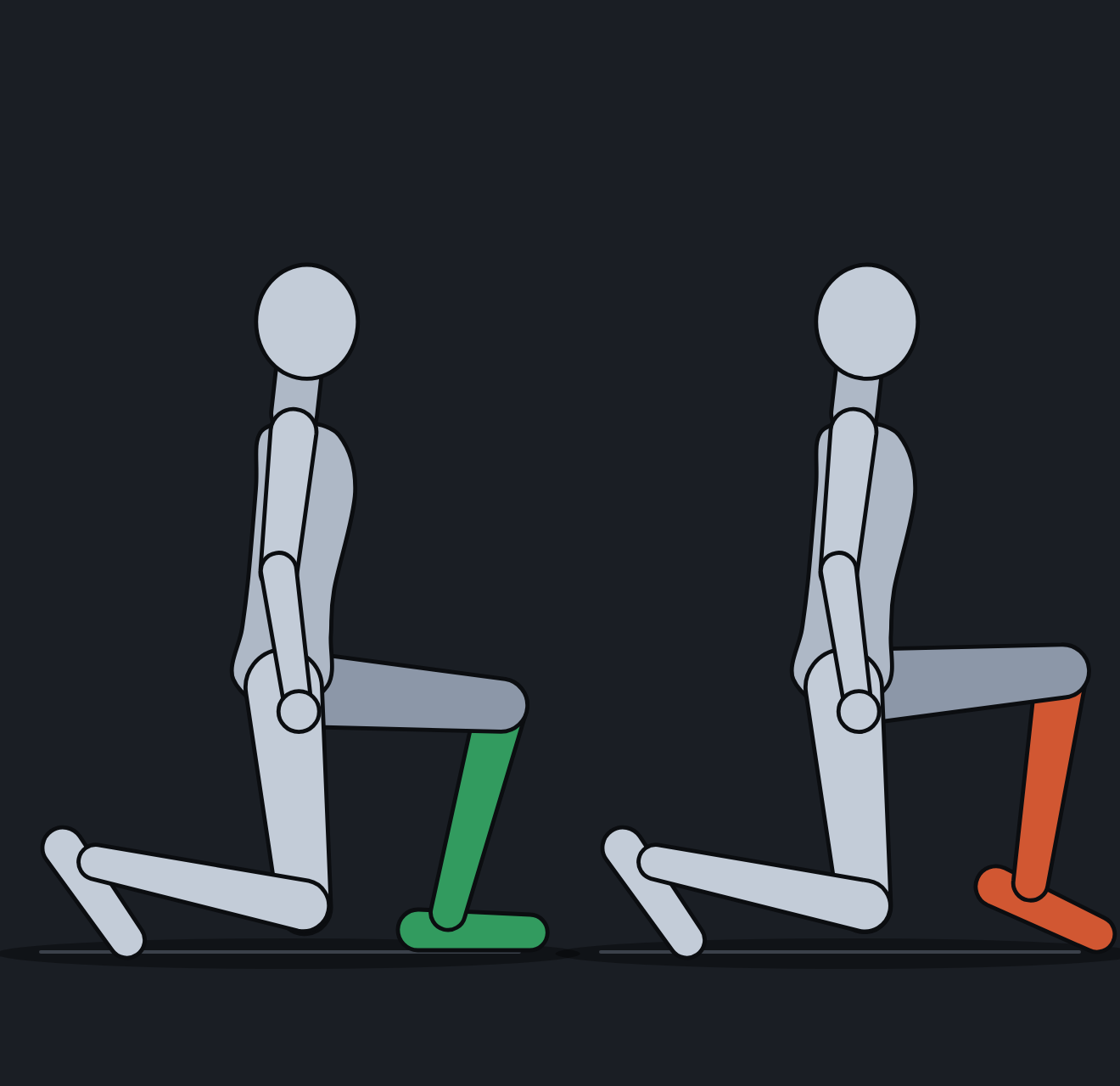 Like thisNot like this
Front foot flatFront heel peels up
See it from the three-quarter
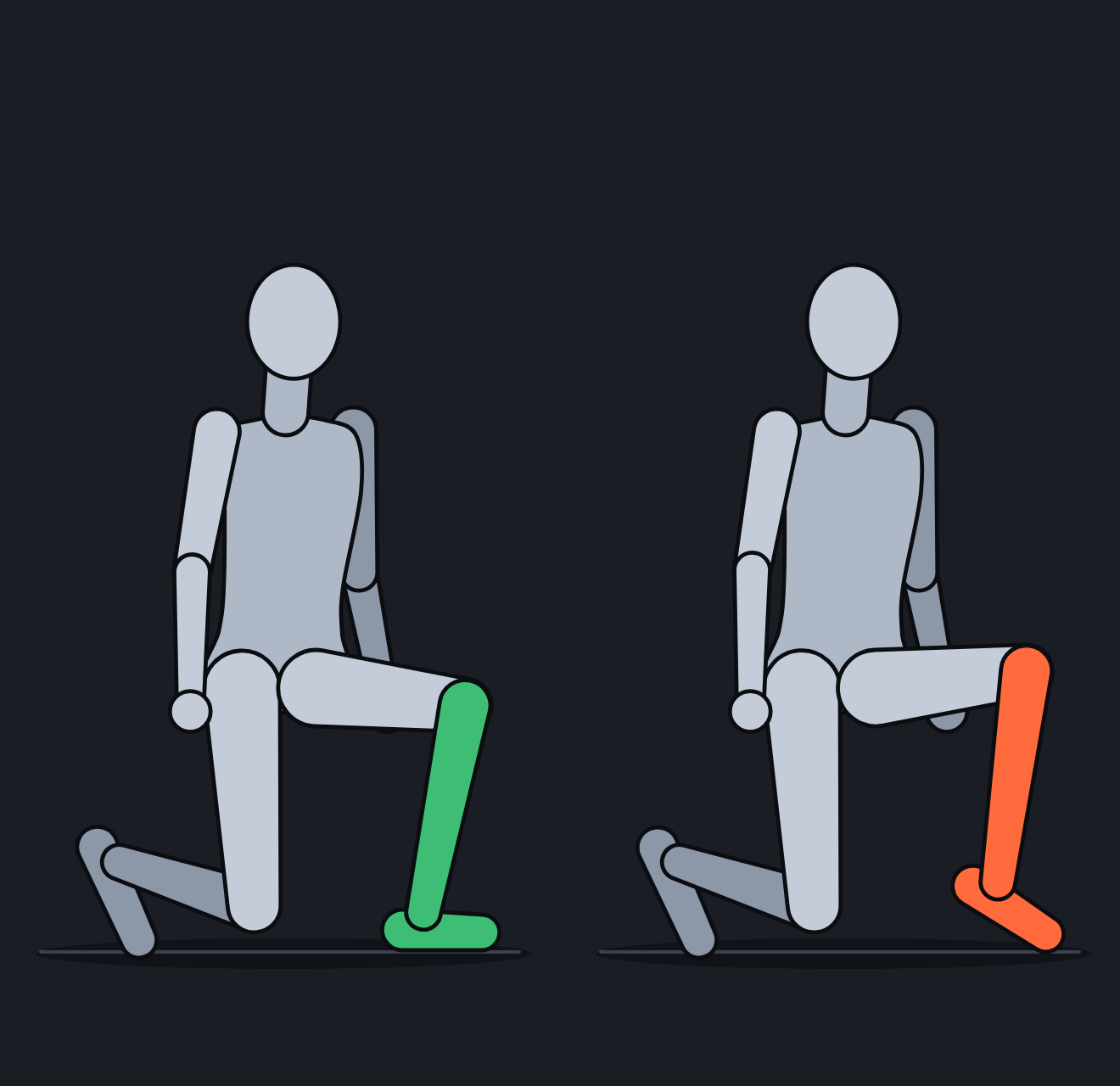 Like thisNot like this
Front foot flatFront heel peels up
Right away
- A front heel that lifts can be a sign your stance is too short, and a short stance can load the kneecap joint more in deep lunges. In a lab study, deep lunges with a short step put more force on it than with a long step.9
- Stiff ankles may play a part. In a lab study, limiting how far the ankles could bend during squats made the knees cave in more and the front thigh muscles work less.10
Months & years
- Extra stress on the kneecap joint may play a part in pain at the front of the knee, but researchers say the evidence for that link is still limited.11
How to fix it
- Lengthen your stance. At the bottom, your front shin should be close to upright, with your knee over your ankle or just in front.
- Keep your weight over the middle of your front foot. You should be able to wiggle your front toes at the bottom.
- Knee-to-wall ankle stretch: foot a few inches from a wall, bend the knee forward to touch the wall with the heel down. 10 slow reps each side.
- Don't overcorrect by forcing your front shin perfectly vertical. In a lab study, holding the front shin back lowered stress on the front knee but added it to the back knee.8
Easier versions while you learn
- Lower only as far as your front heel stays down.
- Hold a counter for balance while you find the stance length that keeps your heel planted.
See a doctor or physical therapist if
- One ankle is much stiffer than the other, or the stiffness started after an ankle sprain.
- The front of your knee aches during lunges, on stairs, or after sitting for a long time.
For trainers: how to cue it
- Film from the front for the knee and from the side for the torso and front heel.
- Check stance length first. A stance that's too short is behind a lot of front-heel lifting, and too narrow a stance makes balance harder and the knee wobble more.
- Cue "straight down, straight up" rather than "forward". The split squat isn't a step.
- If the front knee keeps caving, shorten the range and slow the lowering before adding load.
Older adults: the safer version
A supported split squat trains the same movement with a counter or chair back to hold.
- Stand beside a kitchen counter or behind a sturdy chair that won't slide, and hold it with one or both hands.
- Step one foot back into a comfortable split stance, with your feet about hip width apart and both feet flat to start.
- Bend both knees and lower just a few inches, only as far as feels steady and pain-free, then push back up through your front foot.
- Start with 5 slow reps on each side. Stop if anything hurts or you feel dizzy.
Questions people ask
Can my front knee go past my toes?
Some forward travel is normal. In a lab study, holding the front shin back lowered stress on the front knee but added stress to the back knee, so the right amount depends on which knee you need to go easy on. Ask a trainer if you're unsure.8
How long should my stance be?
Long enough that both knees bend to about a right angle at the bottom with your front heel down. In a split squat study, a stance about as long as your leg suited strength training, and longer steps worked the hips more without changing the thigh work much.1212
Why start with a stationary lunge instead of stepping into it?
It's easier to control, and it may be easier on the front knee. In a lab study, stepping into a forward lunge put more stress on the kneecap joint in the top part of the rep than lunging without the step.9
Want Vicky to watch your lunge?
She coaches in person and online. Send a short video or a question and she'll reply herself.
Email VickySources
- The influence of abnormal hip mechanics on knee injury: a biomechanical perspective.
- Knee valgus angle during single leg squat and landing in patellofemoral pain patients and controls.
- Frontal plane projection angle predicts patellofemoral pain: Prospective study in male military cadets.
- Dynamic Knee Valgus in Single-Leg Movement Tasks. Potentially Modifiable Factors and Exercise Training Options. A Literature Review.
- Relationship between hip strength and frontal plane posture of the knee during a forward lunge.
- Trunk position influences the kinematics, kinetics, and muscle activity of the lead lower extremity during the forward lunge exercise.
- Influence of Trunk Position during Three Lunge Exercises on Muscular Activation in Trained Women.
- Trunk and Shank Position Influences Patellofemoral Joint Stress in the Lead and Trail Limbs During the Forward Lunge Exercise.
- Patellofemoral joint force and stress between a short- and long-step forward lunge.
- Effect of limiting ankle-dorsiflexion range of motion on lower extremity kinematics and muscle-activation patterns during a squat.
- The Role of Cartilage Stress in Patellofemoral Pain.
- Effects of step lengths on biomechanical characteristics of lower extremity during split squat movement.